


Old Greg's Tavern
4.6315.00 Reviews
App Specs
- Version
- 1.4.1
- Updated On
- License
- Free
- Downloads
- 50,000+
- Developer
- Old Greg's Tavern
- Categories
- Role Playing
- Platform
- Android
Screenshots
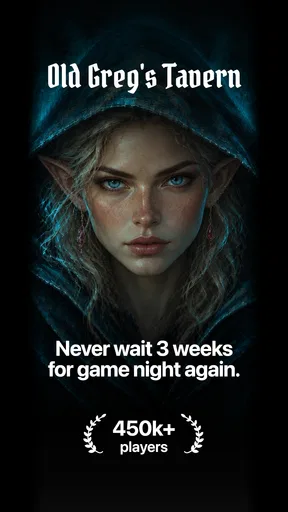
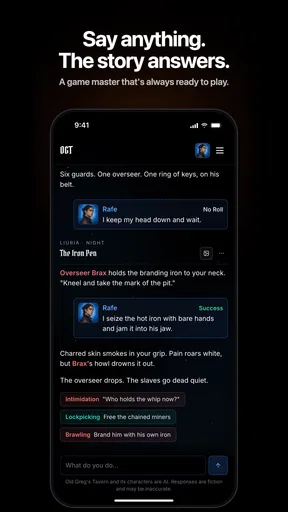
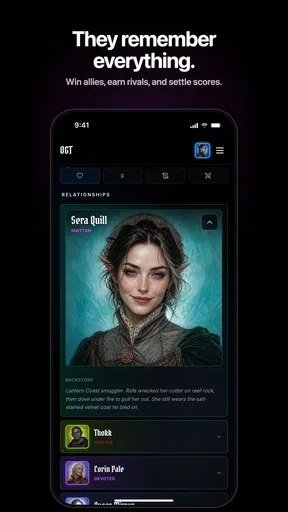
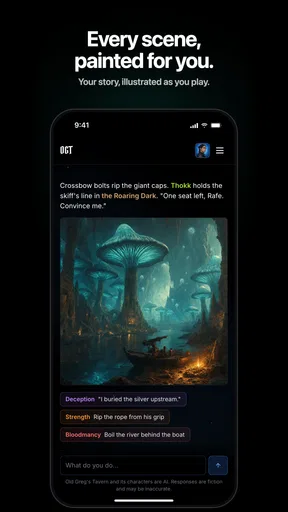
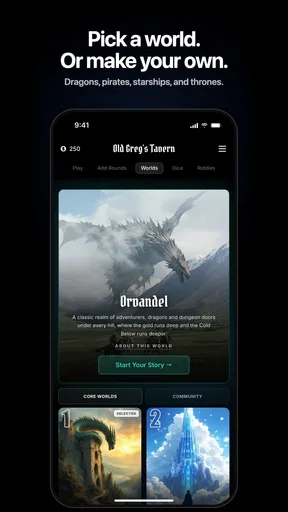
 Analysis by AppCompare
I went into Old Greg's Tavern expecting a compact role-playing game for spare moments, and that is exactly where it makes the strongest first impression. It is built around the idea of playing alone whenever you have time, rather than requiring a large social commitment or a long uninterrupted session. After spending time with it, my opinion is positive but measured: the game is easy to return to, has a clear identity, and works well as a small daily ritual, yet its lasting appeal depends heavily on whether you enjoy repeating a familiar RPG loop without needing a dramatic story campaign to pull you forward.
The game comes from Old Greg's Tavern and is available free of charge, with optional purchases ranging from $3.99 to $24.99 per item. That combination makes it approachable, but it also means I would recommend deciding early how you want to play. You can begin without paying, learn whether the routine suits you, and only then consider spending. For me, that was the right order because the first few sessions are useful for judging the game’s rhythm, while the longer-term question is whether its repeated dungeon-focused play remains satisfying after the initial curiosity wears off.
Why the first week feels so inviting
The opening appeal is convenience. This is a solo RPG rather than a game that asks me to coordinate with other people, maintain a competitive schedule, or wait for a group to become available. I can pick it up when I have a short break, make some progress, and leave without feeling that I have abandoned teammates. That makes it a natural fit for a commute, a quiet coffee break, or the few minutes before bed when I want something interactive but not demanding.
Its role-playing identity also gives those short visits more purpose than a disposable arcade round. I am not simply chasing a score and starting over; I am checking in on a continuing adventure and deciding how much attention I want to give it. That sense of continuity is important. Even a brief session can feel worthwhile when it contributes to a broader run, character development, or dungeon progress, rather than ending as an isolated distraction.
The free entry point helps the first week considerably. I can test the basic loop without making a financial commitment, which is especially useful because the game will not appeal equally to every RPG player. Someone who wants a large, cinematic adventure may find this style too contained. Someone who enjoys a repeatable solo routine may appreciate the lower barrier and the ability to discover the game at their own pace.
I also like that the game’s mature audience is made clear from the start. With a Mature 17+ content rating, it is not something I would casually hand to a younger player or install on a family device without checking the surrounding context. For adult players, that rating sets a useful expectation: this is aimed at a more mature audience, and the tone may not be appropriate for everyone. It is a small detail, but it matters when recommending a game to friends or deciding whether it belongs on a shared tablet.
During the first week, my best approach was to avoid treating every visit as a serious gaming session. The game works better when I let it occupy the spaces between larger activities. I would play with a simple goal in mind, stop when that goal was complete, and return later instead of forcing a long session. That habit kept the experience feeling light and prevented the dungeon routine from becoming work too quickly.
Worth Reading Before You Choose

EA SPORTS FC Mobile 26 Is a Bigger Football Game, but It Takes Time

Flipboard Shows What News Apps Must Do Beyond the Feed

Switching to Android Auto Means Rethinking Your Driving Routine

Google Calendar Makes a Crowded Week Easier to Manage

Ludo King Makes the Most of the Minutes Between Plans

Baby Panda World Brings Quick Play to Modern Phones, but Its Game Library Feels Busy
The right expectations for a solo dungeon routine
The phrase “play solo, anytime” points toward the game’s central strength, but it should not be mistaken for unlimited variety. Convenience is not the same as endless novelty. The first few days benefit from discovery: I am learning how the game presents its challenges, how much attention each visit deserves, and which decisions feel meaningful. Once those questions become familiar, the enjoyment shifts from learning the framework to refining my own routine inside it.
That shift is where the game starts separating its audience. If I need constant new characters, frequent social interaction, or a heavily scripted plot, the early charm may fade quickly. If I enjoy making small decisions, revisiting a dependable format, and gradually improving how I approach a run, the same structure becomes an advantage. It is closer to a reliable hobby than a one-time spectacle.
One practical tip is to play without spending during the initial learning period. The free version gives enough room to determine whether the game’s pace fits your day. I would also avoid buying anything simply because the first sessions feel exciting. The more useful test is whether you still want to open it after the novelty of discovering the basic rhythm has passed. That is the point at which any purchase becomes easier to judge honestly.
What keeps it useful from month to month
For me, recurring value in a solo RPG comes from how naturally it fits into a routine. Old Greg's Tavern has a good chance of becoming a month-to-month game for players who prefer small, repeatable sessions over occasional marathon play. I can imagine opening it after dinner, during a break between errands, or while waiting for an appointment. Those situations do not demand a huge narrative commitment, and the game’s solitary format means I do not have to be available at the same time as anyone else.
The stronger long-term question is whether each return feels like a choice rather than an obligation. A game earns space on my phone when I can use it in different moods. On one day, I may want a quick check-in; on another, I may be willing to think more carefully about a dungeon attempt. That flexibility is more valuable to me than a single impressive opening session because it determines whether the app survives a crowded month.
There is also a useful distinction between progress and maintenance. A good recurring game lets me make progress without requiring constant attention. A burdensome one turns progress into a list of chores. My recommendation is to establish a personal stopping point. Decide what counts as a satisfying visit before opening the game, then leave when you reach it. This prevents the endless-dungeon concept from quietly taking over the time you intended to spend elsewhere.
The game is most suitable for players who enjoy incremental improvement. If your pleasure comes from learning a system, noticing patterns, and making a better decision on the next attempt, the repeated structure can remain rewarding. If your preferred RPG experience is discovering a fixed story with a clear ending, the lack of a traditional campaign finish may feel less satisfying. Neither preference is wrong, but it changes whether the game feels like a lasting companion or merely a short experiment.
Its current version is 1.4.1, and I found that detail relevant mainly as a reminder to keep the app updated when possible. In a game intended for repeated visits, version maintenance matters more than it does in a title I might play once and remove. An update can affect stability, balance, or the smoothness of the daily routine, so I would not judge the long-term experience from one early installation alone.
How it compares with other RPG choices
Compared with a large story-driven RPG, this game asks for less time and gives up some of the spectacle that makes those adventures memorable. A traditional campaign is better when I want elaborate world-building, major plot turns, and a clear sense of moving toward an ending. Old Greg's Tavern is better when I want a self-contained activity that can fit around the rest of my day.
Compared with a multiplayer RPG, the difference is even more practical. There are no group schedules to manage in the way a social game normally requires, and I do not need to worry about disappointing other players by stepping away. That makes this a better choice for irregular play. The trade-off is that solo play cannot provide the same social stories, shared victories, or unpredictable human behavior found in a strong online community.
It also occupies a different space from a purely casual game. A quick puzzle or arcade title may deliver faster entertainment, but it often lacks the feeling of a continuing role-playing journey. This game asks for a little more attention in exchange for a stronger sense of persistence. I would choose it when I want my short session to feel connected to something, not merely consumed and forgotten.
One non-obvious advantage is that the solo format makes it easier to use as a mood-based game. I do not have to promise a particular session length to anyone else. That means I can play cautiously when tired, experiment when focused, or stop immediately when the day becomes busy. This flexibility is easy to overlook when comparing store descriptions, but it is one of the reasons I can see the game fitting into a real monthly routine.
Where maintenance starts to feel like work
The same repeatability that supports regular play can create a maintenance burden. Any game built around returning to a dungeon asks me to keep track of what I was doing, what I want to improve, and whether the next session offers enough interest to justify opening it. That mental cost is small at first, but it grows when I am already managing several other games or apps.
I would be cautious about installing it as a second or third daily game unless you genuinely enjoy routine-based RPGs. The game does not need to become a major commitment to be enjoyable, but it can become another item competing for attention. My practical solution is to give it a defined place in the week rather than treating every available moment as a reason to play. A game that remains optional is easier to enjoy than one that feels like a task list.
The purchase structure deserves similar discipline. Because the game is free to start but offers optional items between $3.99 and $24.99, I would treat spending as a long-term decision rather than a way to solve early uncertainty. First learn the rhythm, then decide whether the convenience or progression benefit is worth the cost to you. Players who dislike in-app purchases on principle may prefer to skip it, even if the free entry is attractive.
Another maintenance issue is device suitability. The minimum operating system is Android 7.0, so compatibility is relatively broad for Android users, but I would still check the device before planning to make it a regular game. A title intended for frequent short sessions should launch reliably and remain comfortable to use. If your phone is already crowded or slow, the practical experience may be less pleasant than the game itself suggests.
The mature rating is part of maintenance too, in a broader sense. If you share a device, use parental controls, or let younger family members browse your installed games, keep the 17+ classification in mind. I would not recommend treating it as a universally suitable RPG simply because it is easy to start. The audience fit is specific, and that is worth respecting before recommending it to someone else.
What can cause fatigue after the novelty fades
The biggest risk is repetition without enough personal investment. An infinite or open-ended dungeon framework can be comforting, but it can also make progress feel abstract if every visit begins to resemble the last. The game is unlikely to satisfy someone who needs a strong final destination. I would skip it if your ideal RPG is defined by completing a story, collecting a fixed set of major milestones, and eventually seeing credits.
Fatigue can also come from decision overload in the wrong mood. A short game session is not automatically relaxing if I am expected to think carefully every time I open it. On busy days, even a modest RPG choice can feel like one more decision. That is why I prefer using it when I want light engagement rather than when I am looking for completely passive entertainment.
The rating and review activity suggest that the game has found an audience, with an average of 4.6 from roughly 5.7 thousand ratings and around 315 written reviews. I see that as encouraging, but not as a substitute for matching the game to your preferences. A strong public response can confirm that the format works for many people while still leaving room for a player who dislikes repetitive solo progression.
Its reach is also meaningful: it has passed 50 thousand installs. That gives the game a visible player base without making it feel like an unavoidable mainstream release. Still, I would not use popularity alone as a reason to keep it installed. The more useful test is personal: after a couple of weeks, do you open it because you want to play, or because you feel you ought to maintain progress?
A concrete way to test that is to take a short break after the first burst of enthusiasm. If you return with a clear goal and feel curious about the next session, the game probably has durable value for you. If reopening it feels like restarting a chore, the novelty has probably done most of its work. This is a better test than judging the game only during its most exciting first evening.
My long-term verdict for different kinds of players
After looking at the game as a recurring habit rather than a quick download, I think Old Greg's Tavern earns lasting space for a particular type of player. I would recommend it to adults who want a solo role-playing game that can be played in short, flexible visits, especially those who enjoy incremental progress and do not need a conventional story ending. The free starting point makes it easy to try, and the game’s identity is clear enough that you can quickly tell whether its routine suits you.
I would be more hesitant to recommend it to players who want expansive presentation, a large social world, or constant novelty. Those players may get more from a traditional campaign RPG or a multiplayer alternative. I would also steer younger players away because of the Mature 17+ rating, and I would advise anyone who strongly dislikes optional purchases to approach the free version with a firm spending limit.
The developer, Old Greg's Tavern, has created something that works best when treated as a dependable side game, not as the only RPG on your device. Its strength is availability: I can play alone, return on my own schedule, and fit the experience around ordinary life. Its weakness is the same structure viewed from another angle: without a personal interest in repetition and gradual improvement, the routine may lose its pull.
My final advice is simple. Install it, play without rushing to buy anything, and judge it after the first-week excitement has settled. Try it in the real situations where you expect to use it: a short break, a quiet evening, or an irregular day when a multiplayer game would be inconvenient. If those sessions feel like a welcome ritual rather than maintenance, it has earned a place in your rotation. If you keep waiting for a larger story or a more social experience, choose a different RPG instead. Its lasting value comes from fitting neatly into your life, not from demanding all of it.
Pros
- Quirky tavern setting gives the game a memorable personality.
- Short sessions make it easy to play during quick breaks.
- Simple controls are approachable for casual players.
- Humorous details reward players who explore the environment.
- The unusual theme helps it stand out from typical mobile games.
Cons
- The niche humor may not appeal to every player.
- Progression can feel repetitive after extended play sessions.
- Some objectives are not clearly explained to new players.
- Visuals may appear basic compared with newer mobile releases.
- Replay value may depend heavily on personal interest in the theme.
FAQs for Old Greg's Tavern
What is Old Greg's Tavern?
Old Greg's Tavern is a tavern-themed game focused on managing, developing, and running your own lively establishment. Players typically serve customers, handle resources, improve the tavern, and make decisions that influence its progress. Its appeal comes from combining casual management mechanics with a humorous fantasy atmosphere, making it suitable for players who enjoy relaxed gameplay, upgrades, and story-driven tavern adventures.
Is Old Greg's Tavern free to download and play?
Old Greg's Tavern may be available as a free download, but players should check the current store listing for the exact pricing and purchase details on their Android or iOS device. Free versions can include optional in-app purchases, advertisements, or paid content. Before downloading, review the app’s store description and payment information, especially if children may access the device.
Does Old Greg's Tavern require an internet connection?
The internet requirements can depend on the version and features available in Old Greg's Tavern. Basic tavern management or progression may work offline, while advertisements, cloud saves, updates, events, or other online services may require a connection. We recommend launching the game once with internet access and checking its settings before assuming that every feature can be used offline.
Is Old Greg's Tavern suitable for children?
Parents should review the official age rating and content description before allowing children to play Old Greg's Tavern. Although a tavern setting may be presented in a playful or cartoon-like way, the game could include fantasy conflict, alcohol-related themes, suggestive humor, advertisements, or in-app purchases. Device parental controls are also useful for restricting spending and monitoring online interactions.
What devices are compatible with Old Greg's Tavern?
Compatibility depends on the operating system version, device hardware, and the edition published for Android or iOS. Before downloading Old Greg's Tavern, check the official store page for supported requirements, available storage, and the latest update information. Older phones or tablets may experience slower loading, reduced performance, or installation problems even when the game appears in search results.


